The #1 organic result averages a 39.8% CTR in 2026 — but that number collapses fast as you move down the page. Here is exactly how your meta title and description drive (or kill) clicks.
2026 CTR Benchmarks: The Numbers You Need to Know
Before comparing meta titles and descriptions, it helps to understand the CTR landscape you are operating in. The data for 2026 paints a clear picture of how competitive organic search has become.
| Position | Average CTR (2026) | Notes |
|---|---|---|
| Featured Snippet | 42.9% | Highest CTR on the SERP [1] |
| #1 Organic | 39.8% | 19× higher than top paid result [1] |
| #2 Organic | 18.7% | Drops sharply from position 1 [1] |
| #3 Organic | 10.2% | Top 3 capture 68.7% of all clicks [1] |
| #10 Organic | 1.6% | Bottom of page one [1] |
| AI Overview present | −61% vs. baseline | CTR drops significantly when AIO appears [5] |
The most striking figure is the −61% CTR drop on queries where AI Overviews are present [5]. This makes the quality of your snippet copy more important than ever — you are competing for a smaller pool of clicks.
Meta Title: The Primary CTR Driver
Your meta title is the single most important element for click-through rate. It is the first thing a user reads, it is displayed in the largest font on the SERP, and it is the primary signal Google uses to match your page to a query. Everything else is secondary.
Technical specifications
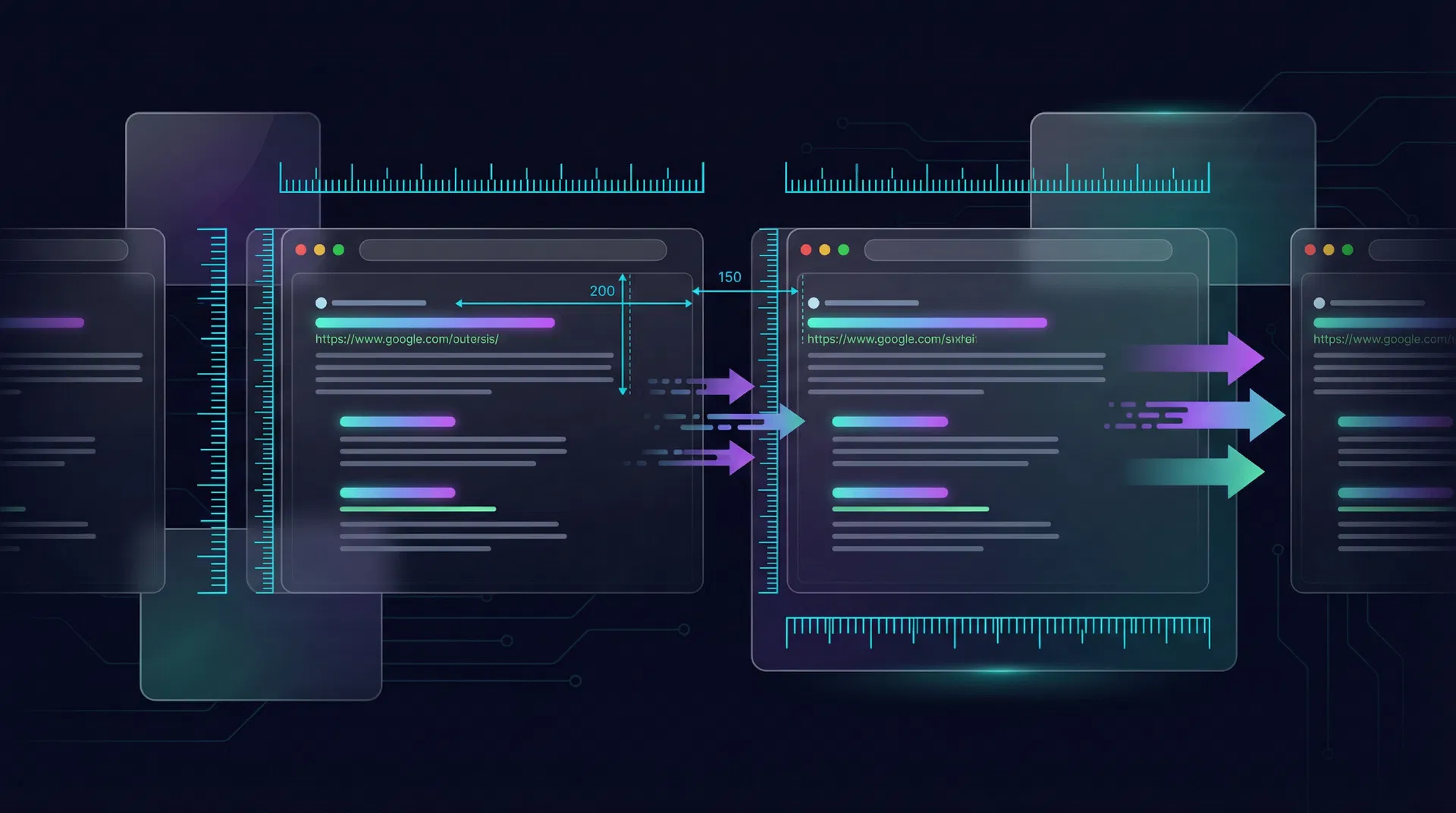
- Desktop: ~600 pixels wide, approximately 50–60 characters for most fonts [2]
- Mobile: ~540–560 pixels, slightly tighter — aim for 50 characters to be safe
- Pixel vs. character: Wide characters like "W" and "M" consume more pixels than narrow ones like "i" and "l". A 60-character title with many wide characters may truncate; a 65-character title with narrow characters may not. Always use a pixel-accurate preview tool.
Keyword placement
Place your primary keyword as close to the beginning of the title as possible. Google bolds matching keywords in the title, and front-loaded keywords are more visible before truncation. A title like "Featured Snippet Guide 2026: How to Win Position Zero" outperforms "How to Win Position Zero: A Complete Featured Snippet Guide for 2026" — even though both contain the same information.
Power words that increase CTR
Certain words consistently increase click-through rates by triggering curiosity, urgency, or authority. The most effective categories in 2026 are:
- Year-specific: "2026", "Updated", "New" — signals freshness
- Completeness: "Complete", "Ultimate", "Full", "Definitive"
- Speed: "Quick", "Fast", "In 5 Minutes", "Instantly"
- Exclusivity: "Proven", "Expert", "Data-Backed"
- Numbers: "12 Ways", "7 Steps", "3 Mistakes" — specificity builds trust
Meta Description: The Conversion Copy of the SERP
The meta description does not directly influence rankings, but it is the primary tool for converting impressions into clicks. Think of it as the ad copy for your organic listing.
Technical specifications
- Desktop: ~920–960 pixels, approximately 155–158 characters [3]
- Mobile: ~680 pixels, approximately 120–130 characters — keep critical information in the first 120 characters
Google rewrites over 62% of meta descriptions
This is the most important fact to understand about meta descriptions in 2026: Google rewrites more than 62% of them [2]. When Google rewrites your description, it pulls text from the page body that it believes better matches the user's query. This is not a reason to skip writing descriptions — it is a reason to make your page body copy as strong as your description copy, so that whatever Google pulls looks compelling.
Writing descriptions that survive Google's rewrites
The descriptions most likely to be used as-written are those that directly match the user's search intent. If someone searches "how to write a meta description", a description that starts with "Learn how to write a meta description that…" is more likely to be preserved than one that starts with a generic brand statement.
How AI Overviews Are Changing the CTR Equation
AI Overviews now appear on approximately 31% of search result pages [1], primarily for informational queries — which are exactly the queries where most content marketers compete. The impact on CTR is significant but nuanced.
When an AI Overview is present, organic CTR drops by an average of 61% compared to the same query without an AIO [5]. However, Google includes source links within AI Overviews, and those source links achieve CTRs comparable to the top 3–5 organic results. The implication: being cited inside the AI Overview is now more valuable than being the first organic result below it.
To maximize your chance of being cited in AI Overviews, write meta descriptions and opening paragraphs in a conversational, direct-answer format. AI Overviews pull from content that is structured as a clear, authoritative answer — the same content that wins featured snippets.
A/B Testing Your Meta Tags: A Practical Framework
The most reliable way to improve CTR is to test systematically. Here is a practical framework using Google Search Console.
Step 1: Identify high-impression, low-CTR pages
In GSC, filter for pages with more than 500 impressions per month and a CTR below your site average. These are your highest-leverage opportunities — you already have visibility, you just need more clicks.
Step 2: Formulate a hypothesis
For each page, identify one specific change: add a year to the title, front-load the primary keyword, rewrite the description to include a benefit statement, or add a number to the title. Test one variable at a time.
Step 3: Implement and wait
Make the change and wait at least 4 weeks before evaluating. CTR data in GSC has a reporting delay, and seasonal fluctuations can skew shorter windows.
Step 4: Measure and iterate
Compare CTR for the 4-week period before and after the change. If CTR improved, keep the change and move to the next page. If it declined, revert and test a different hypothesis. Document every test — patterns emerge quickly across a large site.
About the Author
Alex RiveraSEO Strategist & Content Lead
Alex Rivera is an SEO strategist with 8+ years helping brands win visibility in competitive SERPs. Equal parts data nerd and creative writer, Alex spends off-hours deep in indie game soundtracks, hiking trails, and the occasional football match. Proudly neurospicy — hyperfocus is a superpower when it comes to search.
Sources & References
- 1.Google Click-Through Rates (CTRs) by Ranking Position in 2026
First Page Sage, 2026
- 2.How to Optimize Title Tags & Meta Descriptions in 2026
Straight North, 2026
- 3.How to Write a Meta Description That Boosts CTR (2026)
Incremys, 2026
- 4.8 Meta Description Best Practices for Unbeatable Clicks in 2026
Miles Marketing, 2026
- 5.AI Search and SEO Statistics 2026: Definitive Guide
Digital Applied, 2026