Featured snippets still drive 30–40% CTR lifts over position one — but the rules have changed in 2026. Here is the complete playbook for winning position zero alongside AI Overviews.
What Is a Featured Snippet — and Why It Still Matters in 2026
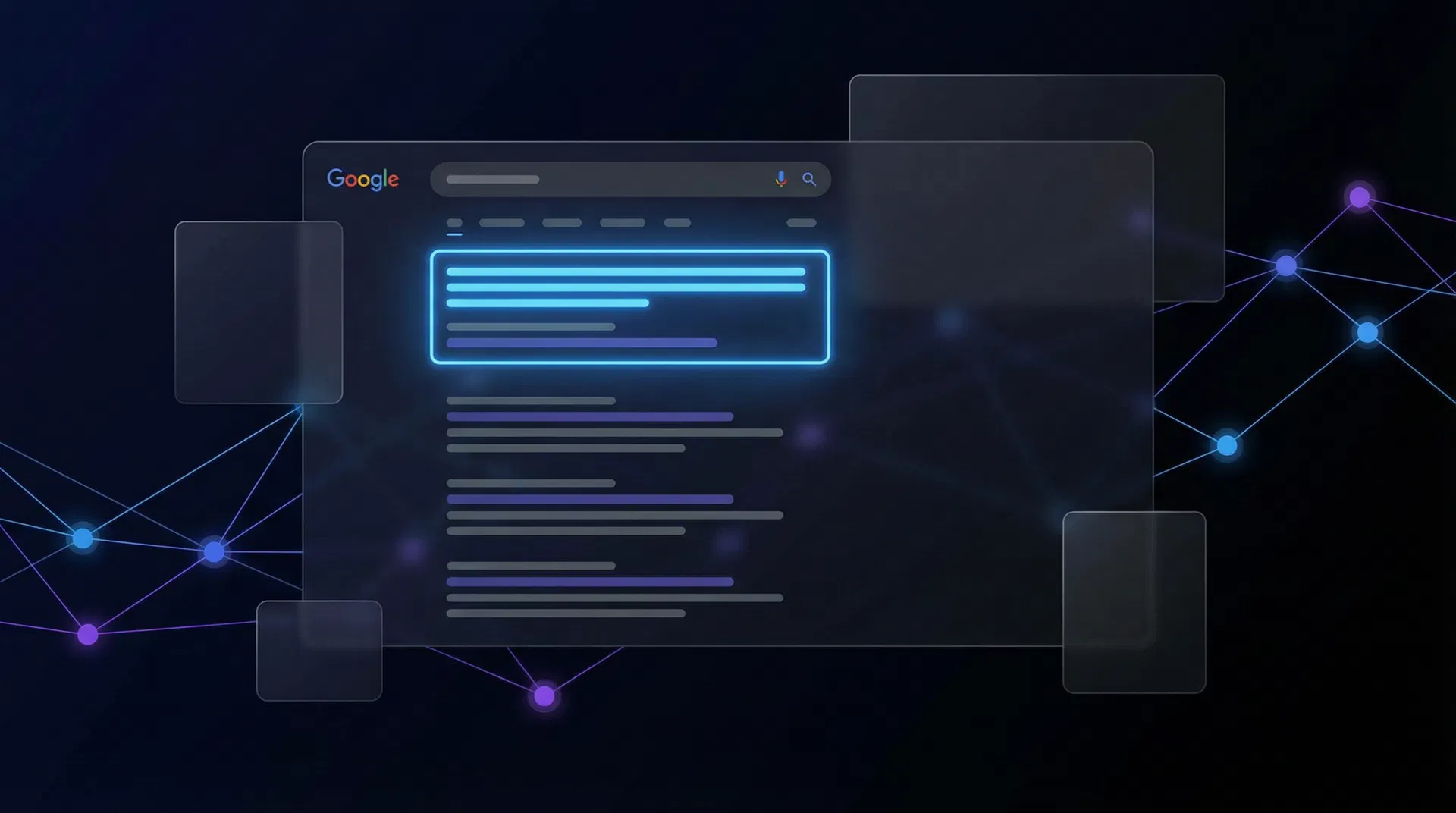
A featured snippet is the highlighted answer box that appears above the first organic result on Google — commonly called position zero. It pulls a direct answer from a web page and displays it prominently, often with the page title and URL below it.
In 2026, the SERP landscape has been reshaped by AI Overviews (Google's generative AI summaries). Yet featured snippets remain highly valuable: they still appear on roughly 19% of queries alongside AI Overviews [1], and pages that hold a snippet are cited in AI Overviews at approximately 2× the rate of non-snippet pages [1]. Winning a snippet is now the single most reliable path to being referenced by Google's AI.
The Four Types of Featured Snippets
Google serves four main snippet formats. Understanding which type applies to your target query is the first step to winning it.
| Type | Triggered by | Best format | Typical length |
|---|---|---|---|
| Paragraph | Definition / "what is" queries | Direct answer paragraph | 40–60 words |
| Numbered list | How-to / step-by-step queries | Ordered <ol> list | 4–8 steps |
| Bulleted list | "Best X" / comparison queries | Unordered <ul> list | 5–10 items |
| Table | Data / pricing / comparison queries | HTML <table> | 3–5 rows × 3–4 columns |
Video snippets exist but are rare and typically reserved for YouTube content. For most SEO practitioners, the paragraph and list formats are the highest-leverage targets.
The Snippet-Capture Content Formula
Google's algorithm selects snippet content based on two primary signals: answerability (how directly the content answers the query) and structural clarity (how easy the HTML is to parse). Here is the formula that consistently wins snippets in 2026.
1. Use a question-based H2 or H3 heading
Place the exact query (or a close variant) as a subheading. Google looks for a heading that mirrors the user's question, then extracts the content immediately below it.
2. Write a 40–60 word direct answer immediately below the heading
Do not bury the answer. The first sentence should directly answer the question. Google consistently selects paragraph snippets in the 40–60 word range [1] — longer answers get truncated, shorter ones may be skipped.
3. Use native HTML lists and tables
For list snippets, use proper <ol> or <ul> tags — not dashes or asterisks in plain text. For table snippets, use a real <table> element with <thead> and <tbody>. Google parses HTML structure, not visual formatting.
4. Target pages ranking between positions 2 and 12
Snippet candidates are almost always drawn from pages already ranking on page one. The highest-leverage targets are positions 4–12 [1] — pages that rank well but have not yet claimed the top spot. If you are in position 1, you may already hold the snippet; if you are beyond page one, focus on ranking first.
Schema Markup That Boosts Snippet Eligibility
Structured data does not directly cause Google to show a snippet, but it dramatically increases the probability by making your content's meaning unambiguous. In 2026, three schema types are most impactful for snippet capture.
FAQ Schema
Add FAQPage schema to pages with question-and-answer sections. Each Q&A pair becomes a candidate for a paragraph snippet. This is the fastest path to snippet capture for informational content.
{
  "@context": "https://schema.org",
  "@type": "FAQPage",
  "mainEntity": [{
    "@type": "Question",
    "name": "How do I get a featured snippet?",
    "acceptedAnswer": {
      "@type": "Answer",
      "text": "To win a featured snippet, write a 40–60 word direct answer immediately below a question-based heading, use proper HTML list or table markup, and ensure your page ranks between positions 2–12 for the target query."
    }
  }]
}
HowTo Schema
For step-by-step content, HowTo schema signals to Google that your content is a procedural guide. Each step maps to a numbered list item, making it a strong candidate for a numbered list snippet.
Speakable Schema
New in 2025–2026, Speakable schema identifies specific sections of your page as suitable for text-to-speech playback. This is now a primary driver for voice search snippets and AI assistant citations [3].
Featured Snippets and AI Overviews: The 2026 Relationship
AI Overviews now appear on approximately 58% of all searches in active markets [1], and they have fundamentally changed how snippet value is calculated. Here is what the data shows:
- Pages with featured snippets are cited in AI Overviews at 2× the rate of non-snippet pages [1].
- On how-to and comparison queries, snippet holders capture over 50% of total clicks even when an AI Overview is present [1].
- Approximately 60% of searches in 2026 end without a click (zero-click) [2], making snippet ownership critical for brand awareness even when no click occurs.
The strategic implication is clear: optimizing for featured snippets and optimizing for AI Overview citations are now the same activity. Write content that directly answers questions, structure it with proper HTML, and back it with schema markup — and you maximize your visibility in both formats simultaneously.
Measuring Featured Snippet Success in Google Search Console
Google Search Console (GSC) does not have a dedicated "featured snippet" filter, but you can identify snippet performance using two methods.
Method 1: Filter by query + check average position
In GSC, go to Search Results → Queries. Filter for queries where your average position is between 0.5 and 1.5 — positions below 1.0 typically indicate a featured snippet. Compare CTR for these queries against your non-snippet queries to quantify the lift.
Method 2: Use the "Search Appearance" filter
In GSC, click Search type → Web, then add a filter for Search Appearance → Web results. Pages appearing as featured snippets will show a noticeably higher CTR than their ranking position would normally predict.
Track these metrics monthly. If a page holds a snippet but CTR is low, the issue is usually the snippet content itself — rewrite the answer to be more compelling or more directly aligned with user intent.
About the Author
Alex RiveraSEO Strategist & Content Lead
Alex Rivera is an SEO strategist with 8+ years helping brands win visibility in competitive SERPs. Equal parts data nerd and creative writer, Alex spends off-hours deep in indie game soundtracks, hiking trails, and the occasional football match. Proudly neurospicy — hyperfocus is a superpower when it comes to search.
Sources & References
- 1.Featured Snippets in the AI Overview Era: 2026 Guide
Digital Applied, 2026
- 2.SEO in 2026: 17 Expert Tips & Predictions
Sitebulb, 2026
- 3.Schema Markup for Featured Snippets: Complete Implementation Guide 2026
Topical Map AI, 2026
- 4.Featured Snippet Statistics (2026): Data, Trends, and Smart Strategies
Yadav Bikash, 2026